

What is the temperature resistance of a thick Babbitt - lined seal?
As a supplier of thick Babbitt - lined seals, I often receive inquiries from customers about the temperature resistance of these seals. Understanding the temperature resistance of a thick Babbitt - lined seal is crucial, as it directly impacts the performance and longevity of the seal in various industrial applications.
Babbitt is a soft, white metal alloy that is commonly used as a lining material in bearings and seals. It has excellent anti - friction properties, which make it ideal for applications where there is relative motion between surfaces. When it comes to thick Babbitt - lined seals, the temperature resistance is determined by several factors, including the composition of the Babbitt alloy, the thickness of the lining, and the operating conditions.
Composition of the Babbitt Alloy
The composition of the Babbitt alloy plays a significant role in its temperature resistance. There are two main types of Babbitt alloys: tin - based and lead - based. Tin - based Babbitt alloys generally have better temperature resistance compared to lead - based alloys. Tin - based Babbitt alloys typically contain a high percentage of tin, along with small amounts of antimony, copper, and other elements. These alloys can withstand higher temperatures without significant softening or deformation.
For example, a common tin - based Babbitt alloy, such as ASTM B23 Grade 1, can typically operate at temperatures up to around 120 - 150°C (248 - 302°F) continuously. At these temperatures, the alloy maintains its mechanical properties and anti - friction characteristics, ensuring reliable sealing performance. On the other hand, lead - based Babbitt alloys, which are often less expensive, have a lower temperature resistance. They are usually suitable for applications where the operating temperature does not exceed 100 - 120°C (212 - 248°F).
Thickness of the Babbitt Lining
The thickness of the Babbitt lining also affects its temperature resistance. A thicker Babbitt lining can dissipate heat more effectively compared to a thinner one. This is because a thicker lining has a larger mass, which can absorb and conduct heat away from the sealing surface.
In applications where high temperatures are expected, a thicker Babbitt lining is often preferred. For instance, in some heavy - duty industrial machinery, a thick Babbitt - lined seal with a lining thickness of several millimeters may be used. This allows the seal to withstand the heat generated during operation without experiencing rapid wear or failure. However, it's important to note that increasing the thickness of the Babbitt lining also has its limitations. If the lining is too thick, it may be more prone to cracking or delamination due to thermal stresses.
Operating Conditions
The operating conditions of the thick Babbitt - lined seal have a profound impact on its temperature resistance. Factors such as the speed of rotation, the load applied to the seal, and the presence of lubricants all influence the temperature at the sealing surface.
Higher rotational speeds generate more heat due to friction between the sealing surfaces. Similarly, a higher load on the seal increases the contact pressure, which also leads to more heat generation. In such cases, the temperature at the sealing surface can rise significantly. To counteract this, proper lubrication is essential. Lubricants not only reduce friction but also help in dissipating heat.
For example, in a high - speed rotating shaft application, a well - lubricated thick Babbitt - lined seal can operate at a higher temperature compared to a dry or poorly lubricated seal. The lubricant forms a thin film between the sealing surfaces, reducing direct contact and heat generation.

Our Product Offerings
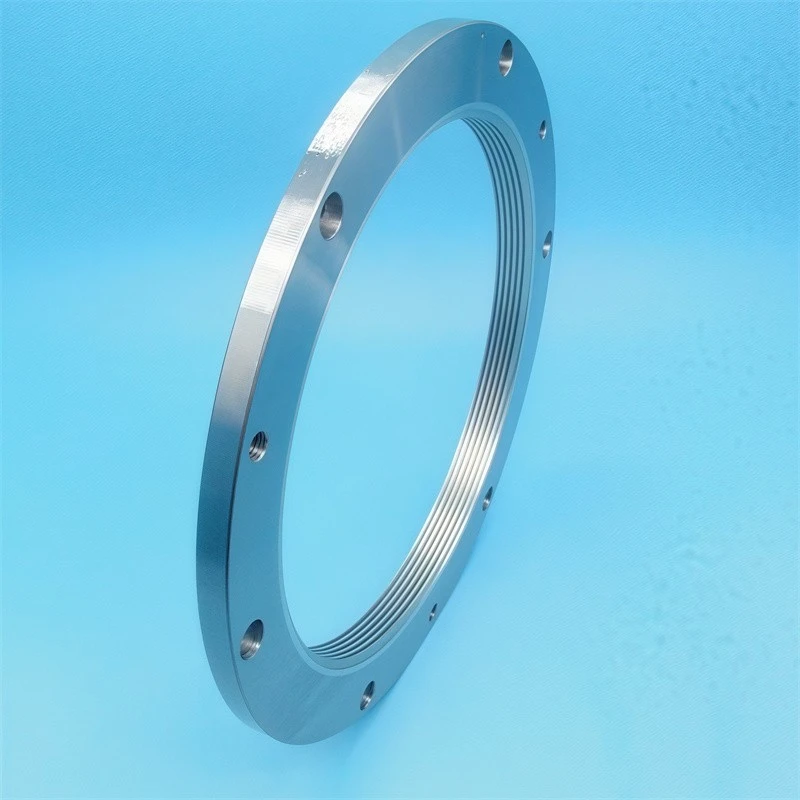
We offer a wide range of thick Babbitt - lined seals to meet the diverse needs of our customers. Our seals are available in different sizes, including Φ150 Babbitt - lined Seal, Φ200 Babbitt - lined Seal, and Φ300 Babbitt - lined Seal. Each of these seals is carefully engineered to provide optimal temperature resistance based on the specific application requirements.
Our team of experts can work with you to select the most suitable Babbitt alloy and lining thickness for your particular operating conditions. Whether you need a seal for a low - temperature application or a high - temperature, heavy - duty environment, we have the expertise and products to meet your needs.
Importance of Temperature Resistance in Applications
The temperature resistance of a thick Babbitt - lined seal is of utmost importance in many industrial applications. In the power generation industry, for example, thick Babbitt - lined seals are used in turbines and generators. These machines operate at high speeds and generate a significant amount of heat. If the seal cannot withstand the operating temperature, it can lead to premature failure, resulting in costly downtime and repairs.
In the automotive industry, thick Babbitt - lined seals are used in engines and transmissions. The high - temperature environment inside these components requires seals with good temperature resistance to ensure reliable performance and prevent oil leakage.
Contact Us for Procurement
If you are in need of thick Babbitt - lined seals for your industrial applications, we encourage you to contact us for procurement. Our team is ready to assist you in selecting the right products and providing you with detailed technical information. We understand the importance of temperature resistance in your applications and are committed to delivering high - quality seals that meet your requirements.
References
- ASM Handbook, Volume 1: Properties and Selection: Irons, Steels, and High - Performance Alloys. ASM International.
- ASTM B23 Standard Specification for Babbitt Bearings. ASTM International.
- Tribology Handbook. Edited by B. Bhushan. Wiley.