

Hey there! As a Babbitt Bearing supplier, I've seen firsthand how crucial surface roughness can be for these bearings. Babbitt bearings are widely used in various industries, from automotive to heavy machinery. And the surface roughness of these bearings can have a significant impact on their performance and longevity.
Let's start by diving into what surface roughness actually means. Surface roughness refers to the irregularities on the surface of a material. In the case of Babbitt bearings, these irregularities can be caused by a variety of factors, such as the manufacturing process, wear and tear, or corrosion. The roughness of a surface is typically measured in terms of Ra (arithmetical mean deviation of the assessed profile).
One of the most important effects of surface roughness on Babbitt bearings is its impact on friction. When two surfaces come into contact, the roughness of those surfaces can affect how easily they slide against each other. In a Babbitt bearing, the surface roughness can influence the frictional forces between the bearing and the shaft. A rougher surface will generally result in higher friction, which can lead to increased wear and tear on the bearing and the shaft. This, in turn, can reduce the efficiency of the machinery and increase the risk of breakdowns.
On the other hand, a smoother surface can reduce friction and improve the performance of the bearing. A lower coefficient of friction means that the bearing can operate more efficiently, with less energy being wasted as heat. This can lead to cost savings in the long run, as well as a longer lifespan for the bearing. For example, if you're using a Babbitt Bearing in a high - speed application, a smoother surface can help to reduce vibrations and noise, making the machinery more comfortable to operate.
Another effect of surface roughness is on the lubrication of the bearing. Lubrication is essential for the proper functioning of Babbitt bearings. It helps to reduce friction, dissipate heat, and prevent wear and corrosion. The surface roughness of the bearing can affect how well the lubricant can adhere to the surface and form a protective film. A rough surface may have more peaks and valleys, which can trap the lubricant and prevent it from spreading evenly across the surface. This can lead to areas of the bearing being under - lubricated, which can cause increased wear and damage.
In contrast, a smoother surface allows the lubricant to spread more evenly, forming a more effective lubricating film. This can improve the overall lubrication performance of the bearing and reduce the risk of metal - to - metal contact. For instance, in a Babbitt Flanged Bearing, proper lubrication is crucial to ensure that the flange area does not experience excessive wear. A smooth surface can help the lubricant reach all the necessary areas, maintaining the integrity of the bearing.
Surface roughness also plays a role in the load - carrying capacity of the bearing. A rough surface may have stress concentrations at the peaks, which can reduce the bearing's ability to withstand heavy loads. These stress concentrations can lead to premature failure of the bearing, especially in applications where high loads are common. A smoother surface distributes the load more evenly, reducing the risk of stress concentrations and increasing the load - carrying capacity of the bearing.
For example, in a Sleeve Babbitt Bearing, which is often used in heavy - duty applications, a smooth surface is essential for handling large loads. By ensuring that the surface is as smooth as possible, we can help the bearing perform better under high - stress conditions.
In addition to these mechanical effects, surface roughness can also impact the corrosion resistance of Babbitt bearings. A rough surface has more exposed areas, which can be more susceptible to corrosion. Corrosion can weaken the bearing material, reduce its performance, and ultimately lead to failure. A smooth surface, on the other hand, is less likely to accumulate moisture and contaminants, which can help to prevent corrosion.
So, how can we control the surface roughness of Babbitt bearings? During the manufacturing process, various techniques can be used to achieve the desired surface finish. Machining operations such as grinding and polishing can be used to reduce the surface roughness. The choice of machining parameters, such as cutting speed, feed rate, and depth of cut, can also have a significant impact on the final surface finish.
As a Babbitt Bearing supplier, we pay close attention to the surface roughness of our products. We use advanced manufacturing techniques and quality control measures to ensure that our bearings meet the highest standards. By providing bearings with the optimal surface roughness, we can help our customers improve the performance and reliability of their machinery.

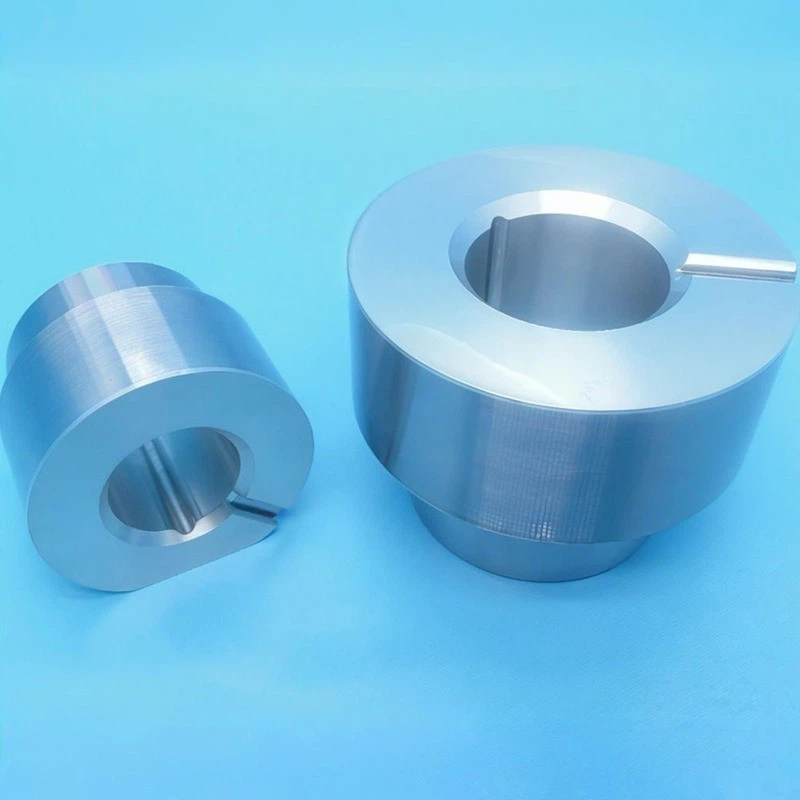
If you're in the market for high - quality Babbitt bearings, whether it's a standard Babbitt Bearing, a Babbitt Flanged Bearing, or a Sleeve Babbitt Bearing, we'd love to have a chat with you. We can discuss your specific requirements and provide you with bearings that are tailored to your needs. Contact us to start the procurement process and let's work together to improve the efficiency and longevity of your machinery.
References
- "Fundamentals of Tribology" by Bharat Bhushan
- "Bearing Design in Machinery: Engineering Tribology and Lubrication" by A. A. Khonsari and E. R. Booser