

As a supplier of Pedestal Pad Thrust Bearings, I've had the privilege of witnessing the remarkable dynamic characteristics that make these bearings an essential component in various industrial applications. In this blog, I'll delve into the key dynamic features of Pedestal Pad Thrust Bearings, exploring their unique capabilities and the benefits they offer.

Self - Alignment and Tilting Mechanism
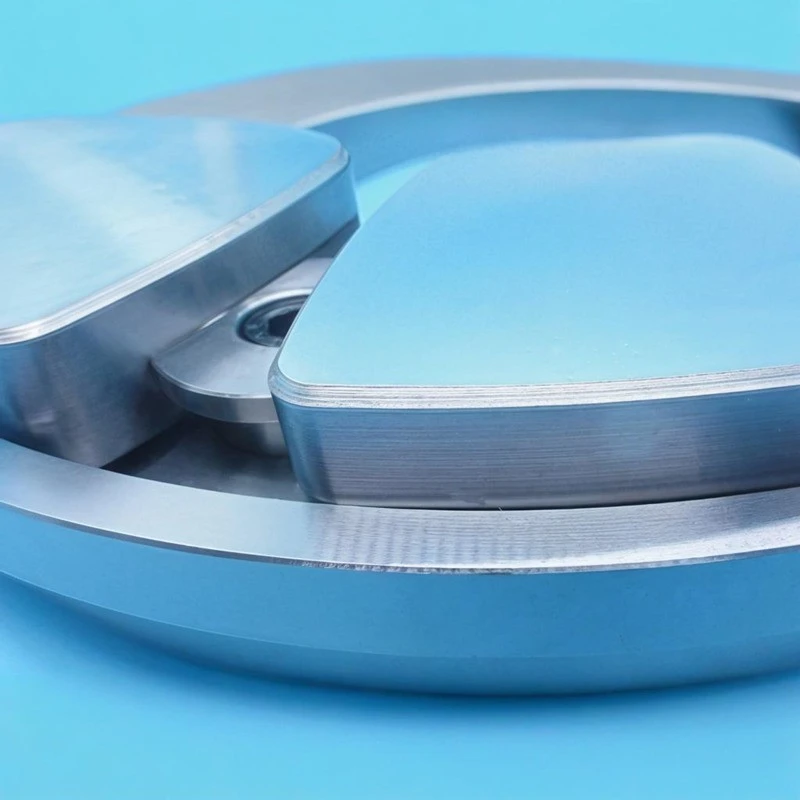
One of the most prominent dynamic characteristics of Pedestal Pad Thrust Bearings is their self - alignment ability. Each pad in the bearing can tilt independently on its pedestal. This feature allows the bearing to adapt to misalignments between the rotating and stationary components. Misalignments can occur due to thermal expansion, shaft deflection, or manufacturing tolerances.
When the shaft experiences misalignment, the individual pads tilt to maintain a uniform pressure distribution across the bearing surface. This self - alignment ensures that the load is evenly distributed among the pads, reducing the risk of excessive wear on any single pad. For example, in a large steam turbine, where high - speed rotation and significant thermal gradients are present, the self - aligning nature of Pedestal Pad Thrust Bearings helps to prevent premature failure and ensures smooth operation.
The tilting mechanism of the pads also contributes to the formation of a stable hydrodynamic lubricating film. As the shaft rotates, the pads tilt to create a wedge - shaped gap between the pad and the thrust collar. This wedge allows the lubricant to be drawn into the contact area, forming a thin film that separates the moving parts. The thickness and stability of this lubricating film are crucial for minimizing friction and wear. A well - formed lubricating film can reduce power losses and extend the service life of the bearing.
Dynamic Load Capacity
Pedestal Pad Thrust Bearings are designed to handle high dynamic loads. The dynamic load capacity of a bearing refers to its ability to withstand the varying loads that occur during operation. In many industrial applications, such as pumps, compressors, and generators, the load on the thrust bearing can change rapidly due to fluctuations in the process conditions.
The multiple - pad design of Pedestal Pad Thrust Bearings distributes the dynamic load evenly across the bearing surface. Each pad can contribute to supporting the load, increasing the overall load - carrying capacity of the bearing. Additionally, the self - aligning feature ensures that the load is distributed optimally even under dynamic conditions.
For instance, in a reciprocating compressor, the piston movement creates a pulsating load on the thrust bearing. The Pedestal Pad Thrust Bearing can effectively handle these dynamic loads, maintaining its performance and reliability. The ability to handle high dynamic loads also allows for more compact and efficient designs, as smaller bearings can be used to achieve the same load - carrying capacity compared to other types of thrust bearings.
High - Speed Performance
Pedestal Pad Thrust Bearings are well - suited for high - speed applications. The design of the bearing allows for smooth operation at high rotational speeds. The self - aligning pads help to reduce vibrations and noise, which are common issues in high - speed machinery.
At high speeds, the formation of a stable hydrodynamic lubricating film becomes even more critical. The tilting pads can adjust their position quickly to maintain the proper lubricating film thickness. This ensures that the bearing operates with low friction and wear, even at high rotational velocities.
In a high - speed electric motor, for example, the Pedestal Pad Thrust Bearing can support the axial load while allowing the motor to operate at speeds of several thousand revolutions per minute. The high - speed performance of these bearings also contributes to the overall efficiency of the machinery, as less energy is wasted due to friction and vibration.
Temperature Resistance
Another important dynamic characteristic of Pedestal Pad Thrust Bearings is their temperature resistance. In many industrial applications, the bearing may be exposed to high temperatures due to the heat generated during operation or the surrounding environment.
The materials used in the construction of Pedestal Pad Thrust Bearings are selected for their high - temperature resistance. The pads are typically made of materials such as babbitt or other high - performance alloys that can withstand elevated temperatures without losing their mechanical properties.
The self - aligning feature of the bearing also helps to manage temperature variations. As the temperature changes, the pads can adjust their position to accommodate thermal expansion and contraction. This ensures that the bearing maintains its performance and reliability even under extreme temperature conditions.
For example, in a gas turbine, where the operating temperatures can be extremely high, the Pedestal Pad Thrust Bearing can withstand the heat while providing stable support for the shaft. The temperature resistance of the bearing also reduces the need for complex cooling systems, which can simplify the design and operation of the machinery.
Vibration Damping
Pedestal Pad Thrust Bearings have excellent vibration - damping properties. The tilting pads can absorb and dissipate vibrations generated during operation. This is particularly important in applications where vibrations can cause damage to the machinery or affect its performance.
In a rotating machine, such as a centrifugal pump, vibrations can be caused by unbalanced loads, misalignment, or fluid - induced forces. The Pedestal Pad Thrust Bearing can help to reduce these vibrations, improving the overall stability and reliability of the pump. The vibration - damping ability of the bearing also contributes to a quieter operating environment, which is beneficial in many industrial settings.
Applications and Advantages
The dynamic characteristics of Pedestal Pad Thrust Bearings make them suitable for a wide range of applications. They are commonly used in power generation, oil and gas, marine, and industrial machinery sectors.
In power generation, Pedestal Pad Thrust Bearings are used in steam turbines, hydro turbines, and generators. Their ability to handle high dynamic loads, high - speed rotation, and temperature variations makes them ideal for these critical applications. In the oil and gas industry, they are used in pumps, compressors, and drilling equipment, where reliability and performance are essential.
The advantages of using Pedestal Pad Thrust Bearings include increased reliability, reduced maintenance costs, and improved efficiency. The self - aligning feature and the ability to handle dynamic loads ensure a longer service life, reducing the frequency of bearing replacements. The high - speed performance and temperature resistance contribute to the overall efficiency of the machinery, resulting in lower energy consumption.
If you are interested in learning more about Pedestal Pad Thrust Bearings or Tilting Pad Thrust Bearing Assembly, or Pad Thrust Bearing, please feel free to contact us for procurement and further discussions. Our team of experts is ready to assist you in finding the best bearing solutions for your specific applications.
References
- Harris, T. A., & Kotzalas, M. N. (2007). Rolling Bearing Analysis. Wiley.
- Khonsari, M. M., & Booser, E. R. (2001). Applied Tribology: Bearing Design and Lubrication. Wiley.