

Babbitt flanged bearings are crucial components in various industrial applications, offering reliable support and smooth operation for rotating shafts. As a supplier of Babbitt flanged bearings, I am often asked about the materials used in these bearings. In this blog post, I will delve into the materials of Babbitt flanged bearings, exploring their properties, advantages, and applications.
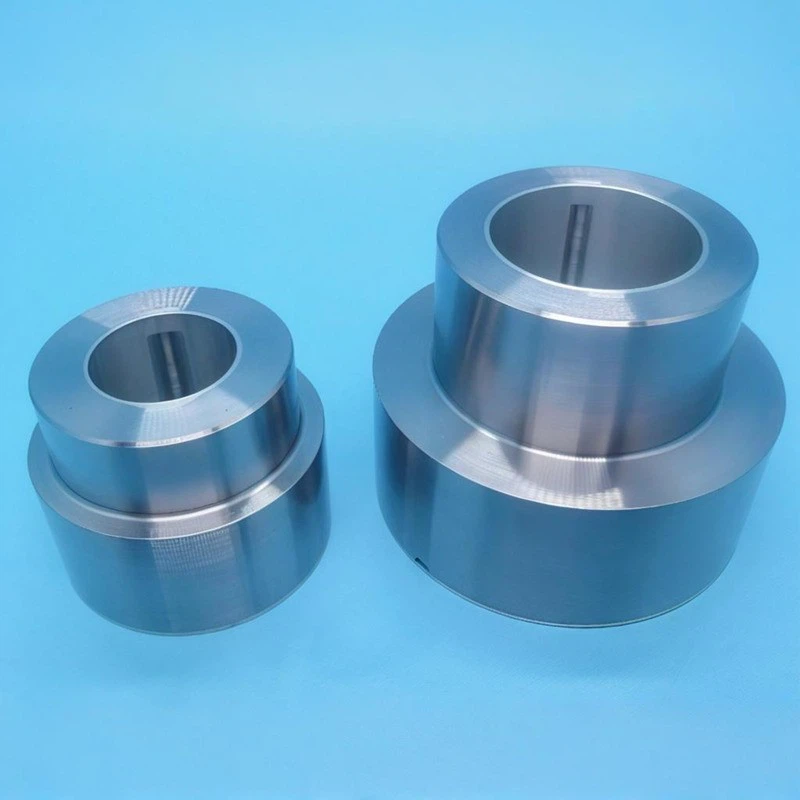

Understanding Babbitt Metal
At the heart of Babbitt flanged bearings is Babbitt metal, also known as white metal. Babbitt metal is a soft, low - melting - point alloy that was first developed by Isaac Babbitt in 1839. The primary purpose of using Babbitt metal in bearings is to provide a low - friction surface that can withstand high loads and prevent shaft wear.
There are two main types of Babbitt metal: tin - based and lead - based.
Tin - Based Babbitt Metal
Tin - based Babbitt metal is composed mainly of tin (Sn), with small amounts of antimony (Sb), copper (Cu), and sometimes other elements. The typical composition of a common tin - based Babbitt alloy might be around 88% tin, 8% antimony, and 4% copper.
Tin - based Babbitt has several outstanding properties. Firstly, it has excellent anti - seizure properties. When the bearing is under high load or in a situation where lubrication is temporarily interrupted, the soft Babbitt layer can deform slightly, preventing the shaft from seizing to the bearing surface. Secondly, it has good corrosion resistance, which is especially important in environments where the bearing may be exposed to moisture or chemicals. Thirdly, tin - based Babbitt has a relatively low coefficient of friction, which helps to reduce energy consumption and heat generation during operation.
Due to these properties, tin - based Babbitt is often used in high - speed, high - precision applications such as in turbines, electric motors, and automotive engines. For example, in a turbine, the high - speed rotation of the shaft requires a bearing material that can provide smooth operation and prevent wear, and tin - based Babbitt fits the bill perfectly.
Lead - Based Babbitt Metal
Lead - based Babbitt metal has lead (Pb) as its main component, along with antimony, tin, and other elements. A typical lead - based Babbitt alloy might contain around 80% lead, 10% antimony, and 10% tin.
Lead - based Babbitt is more cost - effective compared to tin - based Babbitt. It also has good conformability, which means it can adapt to small misalignments between the shaft and the bearing. However, it has lower corrosion resistance and anti - seizure properties compared to tin - based Babbitt.
Lead - based Babbitt is commonly used in less demanding applications where cost is a major concern, such as in some agricultural machinery and low - speed industrial equipment.
Other Materials in Babbitt Flanged Bearings
In addition to the Babbitt layer, Babbitt flanged bearings also consist of other materials that play important roles in their structure and performance.
Backing Material
The backing material provides the structural support for the Babbitt layer. Common backing materials include steel and bronze.
Steel is a popular choice for the backing material because of its high strength and good toughness. It can withstand high loads and stresses without deforming. Steel - backed Babbitt flanged bearings are widely used in heavy - duty applications such as in mining equipment, construction machinery, and large - scale industrial pumps.
Bronze, on the other hand, has good thermal conductivity and wear resistance. It can dissipate heat generated during operation more effectively, which helps to maintain the performance of the bearing. Bronze - backed Babbitt bearings are often used in applications where heat management is crucial, such as in some high - speed gearboxes.
Flange Material
The flange of a Babbitt flanged bearing serves to locate the bearing axially and prevent it from moving along the shaft. The flange is usually made of the same material as the backing, either steel or bronze. In some cases, for special applications, the flange may be made of a different material with specific properties, such as a high - strength alloy to withstand extreme axial loads.
Applications of Babbitt Flanged Bearings
Babbitt flanged bearings are used in a wide range of industries due to their unique properties.
Power Generation
In power plants, whether it is a thermal power plant, a hydro - power plant, or a wind power plant, Babbitt flanged bearings are used in turbines, generators, and other rotating equipment. The high - speed and high - load operation in these power generation systems require bearings with excellent performance, and Babbitt flanged bearings, especially those with tin - based Babbitt and steel backing, can meet these requirements.
Automotive Industry
In automotive engines, Babbitt flanged bearings are used in the crankshaft and camshaft. The smooth operation of these shafts is essential for the performance and reliability of the engine. The anti - seizure and low - friction properties of Babbitt metal help to ensure the long - term operation of the engine components.
Industrial Machinery
In various industrial machinery such as pumps, compressors, and conveyors, Babbitt flanged bearings are used to support rotating shafts. The ability of Babbitt bearings to adapt to different operating conditions, including load, speed, and temperature, makes them a popular choice in industrial applications.
Advantages of Using Babbitt Flanged Bearings
There are several advantages of using Babbitt flanged bearings in industrial applications.
Low Friction
The Babbitt metal layer provides a low - friction surface, which reduces energy consumption and heat generation during operation. This not only improves the efficiency of the equipment but also extends the service life of the bearing and the shaft.
Good Conformability
Babbitt metal can conform to small irregularities on the shaft surface and small misalignments between the shaft and the bearing. This helps to distribute the load evenly across the bearing surface, reducing the risk of premature wear and failure.
Easy to Repair and Re - line
If the Babbitt layer is worn out or damaged, it can be easily removed and re - lined. This is a cost - effective way to extend the service life of the bearing, especially compared to replacing the entire bearing.
Conclusion
In conclusion, Babbitt flanged bearings are made up of a combination of materials, with Babbitt metal being the key component. The choice of Babbitt metal (tin - based or lead - based) and the backing material (steel or bronze) depends on the specific application requirements, such as load, speed, temperature, and cost.
As a supplier of Babbitt Flanged Bearings, we offer a wide range of Babbitt flanged bearings to meet the diverse needs of our customers. Our bearings are made with high - quality materials and advanced manufacturing processes to ensure reliable performance and long service life.
If you are in need of Babbitt flanged bearings for your industrial applications, or if you have any questions about our products, please feel free to contact us for a procurement discussion. We are committed to providing you with the best solutions and excellent customer service.
References
- "Handbook of Bearings" by John A. Black
- "Materials Science and Engineering: An Introduction" by William D. Callister Jr. and David G. Rethwisch
- Industry reports on bearing manufacturing and applications