

As a supplier of Taper - land Thrust Bearings, I've witnessed firsthand the critical role that temperature plays in the performance of these vital components. In this blog, I'll delve into how temperature affects the performance of Taper - land Thrust Bearings, drawing on both theoretical knowledge and practical experience.
Understanding Taper - land Thrust Bearings
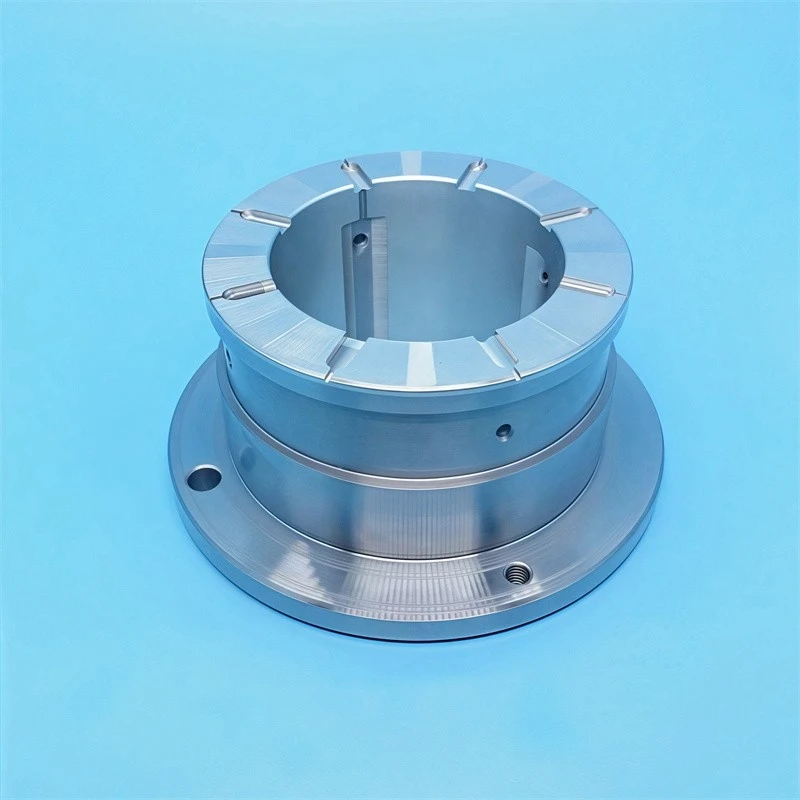
Before we explore the impact of temperature, let's briefly understand what Taper - land Thrust Bearings are. Taper - land Thrust Bearings are a type of Taper - land Thrust Bearing designed to handle axial loads in rotating machinery. They consist of a series of pads with a tapered land at the leading edge, which helps to generate a hydrodynamic film of lubricant. This film separates the rotating and stationary surfaces, reducing friction and wear.
The Role of Lubricant in Taper - land Thrust Bearings
Lubrication is crucial for the proper functioning of Taper - land Thrust Bearings. The lubricant forms a thin film between the bearing surfaces, preventing direct metal - to - metal contact. It also helps to dissipate heat generated during operation. The most common type of lubricant used in these bearings is oil, which has excellent lubricating properties and can withstand high pressures.
How Temperature Affects Lubricant Viscosity
One of the primary ways temperature affects the performance of Taper - land Thrust Bearings is by altering the viscosity of the lubricant. Viscosity is a measure of a fluid's resistance to flow. As the temperature of the lubricant increases, its viscosity decreases. This is because the molecules in the lubricant gain more energy at higher temperatures, allowing them to move more freely.
When the viscosity of the lubricant decreases, the hydrodynamic film thickness between the bearing surfaces also decreases. A thinner film may not be able to support the load effectively, leading to increased friction and wear. In extreme cases, the film may break down completely, resulting in metal - to - metal contact and catastrophic bearing failure.
Conversely, at low temperatures, the viscosity of the lubricant increases. A highly viscous lubricant may not flow easily into the bearing clearances, leading to poor lubrication. This can also cause increased friction and wear, as well as difficulties in starting the machinery.

Thermal Expansion and Its Effects
Temperature changes can also cause thermal expansion in the components of Taper - land Thrust Bearings. Different materials have different coefficients of thermal expansion. For example, the bearing pads and the housing may expand at different rates when heated.
If the thermal expansion is not properly accounted for, it can lead to changes in the bearing clearances. A decrease in clearance due to thermal expansion can cause the bearing to bind, increasing friction and heat generation. On the other hand, an increase in clearance may result in excessive vibration and reduced load - carrying capacity.
Impact on Bearing Material Properties
High temperatures can also affect the mechanical properties of the bearing materials. For example, some bearing materials may experience a decrease in hardness and strength at elevated temperatures. This can make the bearing more susceptible to wear, deformation, and fatigue.
Tin bronze is a commonly used material in thrust bearings, such as Tin Bronze Thrust Bearing. At high temperatures, the mechanical properties of tin bronze may degrade, reducing its ability to withstand the loads and stresses imposed on the bearing.
Temperature and Bearing Cooling
To maintain the proper performance of Taper - land Thrust Bearings, it is essential to control the operating temperature. This is typically achieved through a cooling system. The cooling system can remove heat from the lubricant and the bearing components, keeping the temperature within an acceptable range.
There are several types of cooling systems used in conjunction with Taper - land Thrust Bearings. One common method is to use a heat exchanger to cool the lubricant. The heat exchanger transfers the heat from the lubricant to a cooling medium, such as water or air.
Another approach is to use direct cooling of the bearing components. This can be done by circulating a coolant through channels in the bearing housing or by using a spray of coolant on the bearing surfaces.
Monitoring Temperature in Taper - land Thrust Bearings
Monitoring the temperature of Taper - land Thrust Bearings is crucial for detecting potential problems early. Temperature sensors can be installed in the bearing housing or in the lubricant to measure the temperature. By continuously monitoring the temperature, operators can detect any abnormal increases, which may indicate a problem with the bearing or the lubrication system.
If the temperature exceeds the recommended operating range, corrective actions should be taken immediately. This may include adjusting the cooling system, changing the lubricant, or inspecting the bearing for damage.
Comparing Taper - land Thrust Bearings with Other Types of Bearings
It's also interesting to compare Taper - land Thrust Bearings with other types of bearings, such as Plain Journal Fluid Film Bearing. While both types rely on a hydrodynamic lubricant film, Taper - land Thrust Bearings are specifically designed to handle axial loads, while plain journal bearings are more suitable for radial loads.
The temperature effects on these two types of bearings are similar in terms of lubricant viscosity and thermal expansion. However, the design of Taper - land Thrust Bearings may make them more sensitive to temperature changes in some cases, especially when it comes to load - carrying capacity and film thickness.
Conclusion and Call to Action
In conclusion, temperature has a significant impact on the performance of Taper - land Thrust Bearings. It affects the viscosity of the lubricant, causes thermal expansion, and can alter the mechanical properties of the bearing materials. Proper temperature control and monitoring are essential for ensuring the reliable operation of these bearings.
As a supplier of Taper - land Thrust Bearings, we understand the importance of providing high - quality products that can withstand a wide range of operating conditions. Our bearings are designed and manufactured to meet the highest standards, and we offer comprehensive technical support to our customers.
If you are in the market for Taper - land Thrust Bearings or have any questions about their performance and temperature management, we encourage you to contact us for a detailed discussion. Our team of experts is ready to assist you in finding the best solution for your specific application.
References
- Harris, T. A., & Kotzalas, M. N. (2007). Rolling Bearing Analysis. Wiley.
- Khonsari, M. M., & Booser, E. R. (2001). Applied Tribology: Bearing Design and Lubrication. Wiley.
- Tallian, T. E. (1986). Rolling Bearing Fatigue Life Prediction. American Society of Mechanical Engineers.